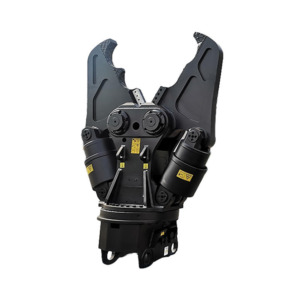
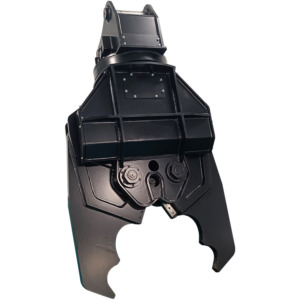
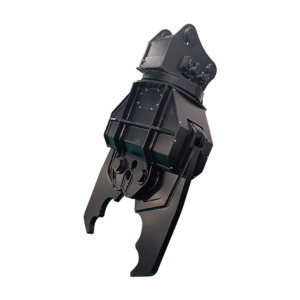
Introduction: Dedicated Rock-Working Tool Leveraging Excavator Advantages
Excavator Mounted Rock Drill and Splitter Attachment is made for users who want a dedicated rock-working tool that takes full advantage of excavator movement, reach, and site flexibility. By mounting the attachment directly on the excavator, contractors can approach hard rock with better positioning and carry out drilling and splitting in a practical field sequence. This makes the product suitable for quarry development, slope cutting, road widening, trench work, and foundation excavation where both mobility and controlled rock removal matter.
Operational Benefit: Simplifying Workflows with Existing Excavators
The attachment format gives crews an important operational benefit. It lets them use existing excavators as the main carrier instead of relying on separate dedicated machines for each step. That can reduce setup time, simplify transport planning, and make daily jobsite routines more efficient. An Excavator Mounted Rock Drill and Splitter Attachment helps contractors keep their work organized, especially on sites where access changes quickly or where machines need to move between several work points during the same shift.
Mobility Advantage: Adapting to Complex and Variable Terrain
Because the tool is excavator mounted, operators can use boom reach and machine positioning to work along uneven surfaces, into tight corners, or across variable terrain. This is valuable on mountain roads, quarry faces, slope projects, rural construction sites, and infrastructure jobs with limited space. The machine can travel with the excavator, which reduces unnecessary repositioning effort and supports smoother production. Excavator Mounted Rock Drill and Splitter Attachment is a good answer for customers who need rock-working capability without sacrificing jobsite mobility.
Key Application: Ideal for Controlled, Non-Blasting Rock Removal
This category of equipment is also attractive for controlled, non-blasting work. Many contractors need to remove rock near structures, within restricted project boundaries, or in areas where they must manage the breaking process carefully. The drilling and splitting sequence helps teams work with more precision than rough impact-only methods. That makes the attachment useful for utility trenches, prepared foundation zones, dimension stone work, and secondary rock breaking. In these cases, better control often leads to cleaner results and easier site management.
Practical Value: Improving Site and Equipment Planning
It can also help companies improve equipment planning. Using one excavator-mounted solution for drilling and splitting reduces the need to stage extra rock tools in the same work zone. That keeps the site cleaner and allows managers to allocate labor and machine time more effectively. Over time, those practical savings can strengthen project profitability.
Fleet Efficiency: Expanding Excavator Utility and Market Appeal
Another major selling point is fleet efficiency. Buyers often want tools that expand the service range of excavators they already own. An Excavator Mounted Rock Drill and Splitter Attachment turns the excavator into a specialized rock-processing platform while keeping the overall fleet structure simple. This can improve return on equipment investment and help contractors bid on a wider range of jobs. For distributors, it is an appealing product because it meets clear needs across quarry, civil construction, demolition preparation, and stone processing markets.
Conclusion: A Versatile Solution for Efficient Hard-Rock Operations
Excavator Mounted Rock Drill and Splitter Attachment offers a practical combination of mobility, application range, and controlled rock-breaking capability. It is a strong choice for users who want to drill and split rock with one excavator-based solution. Whether the project is in a quarry, on a slope, beside a road, or inside a foundation area, Excavator Mounted Rock Drill and Splitter Attachment helps crews work more efficiently and keep hard-rock operations under better control.

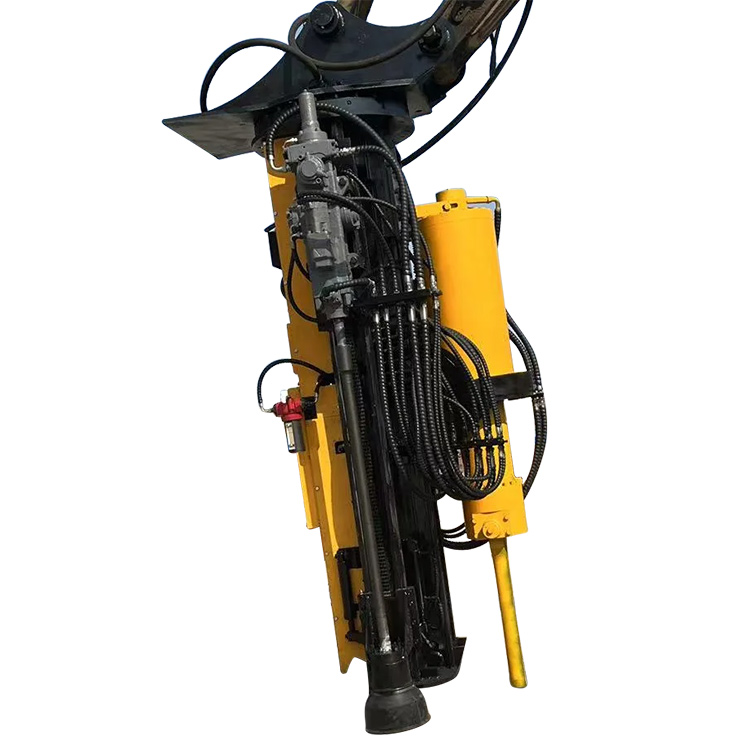
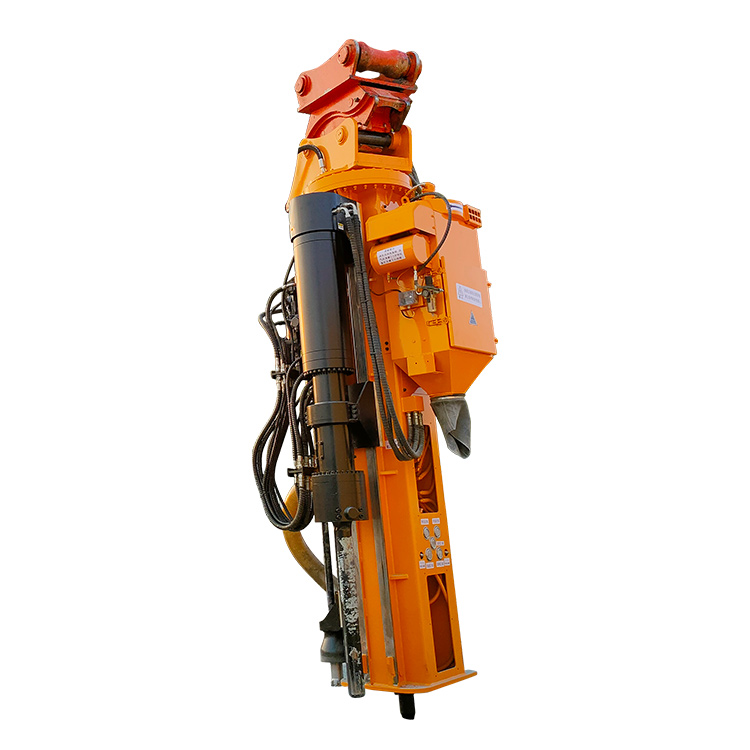
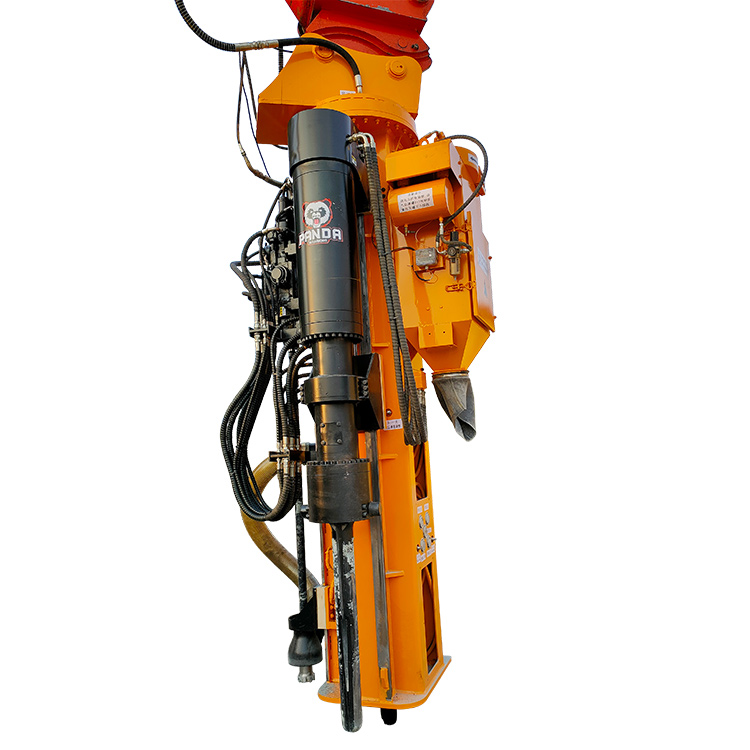
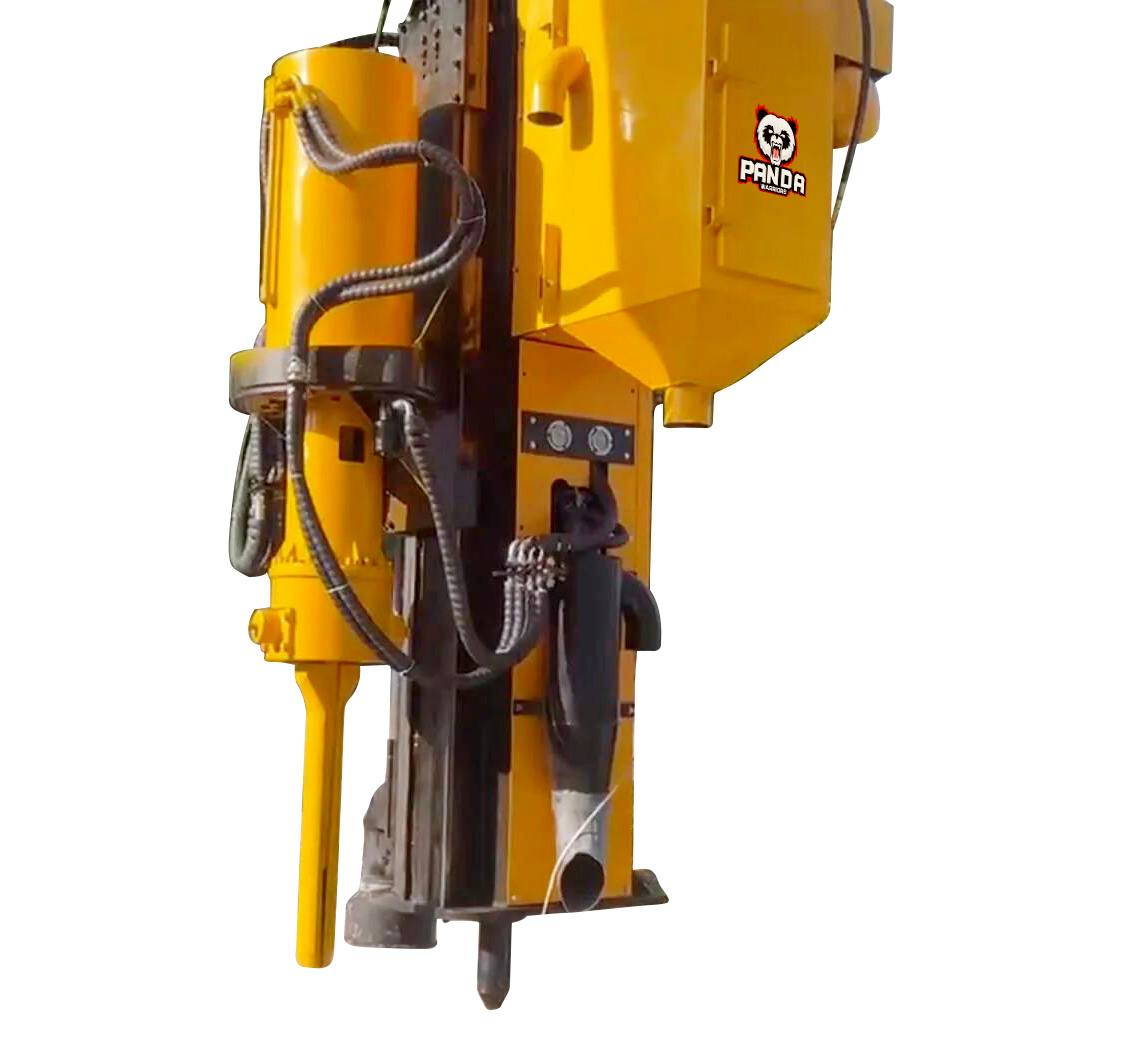
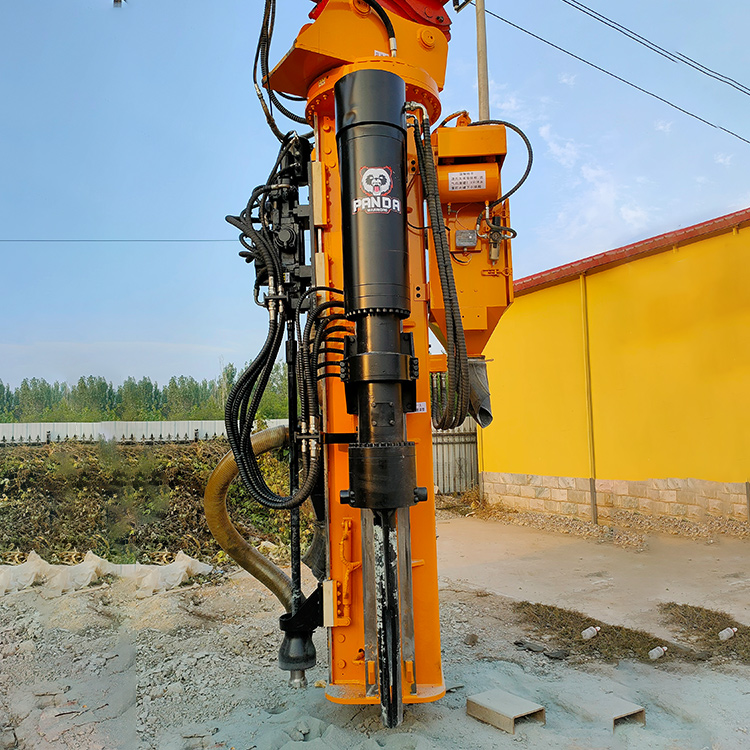
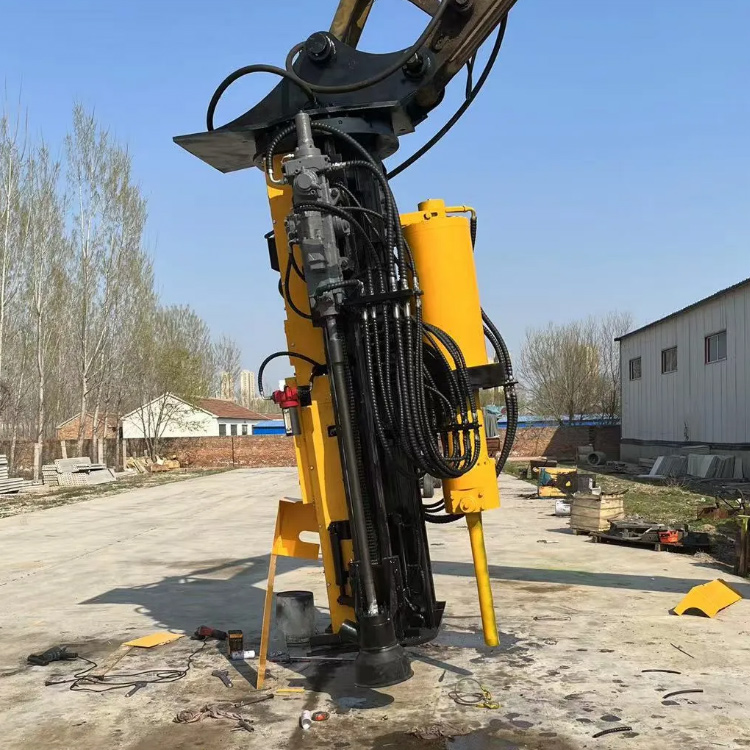
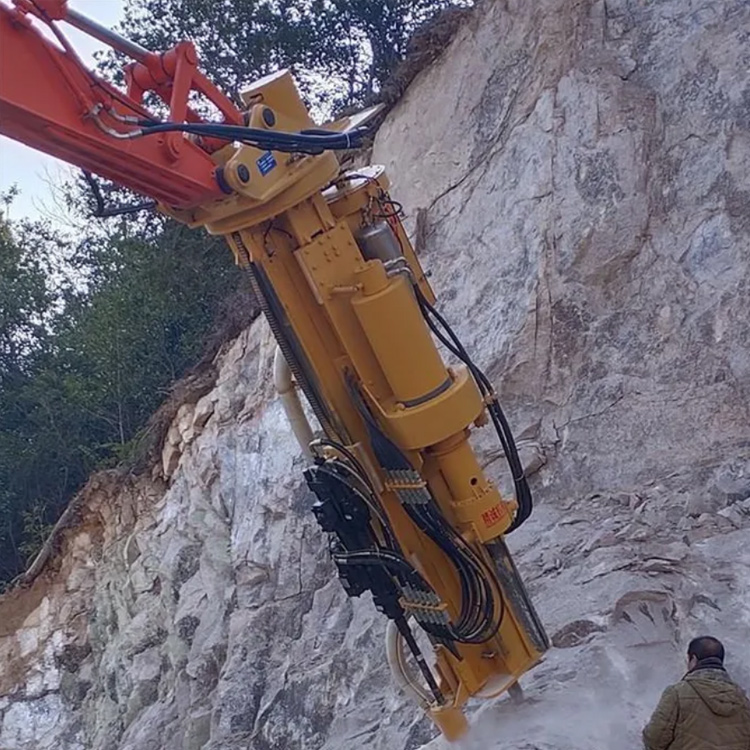
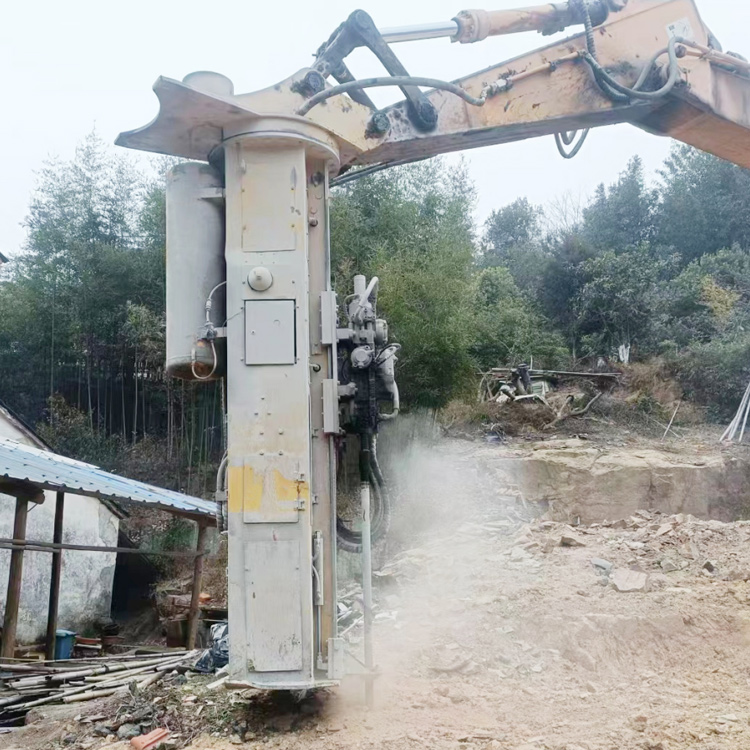
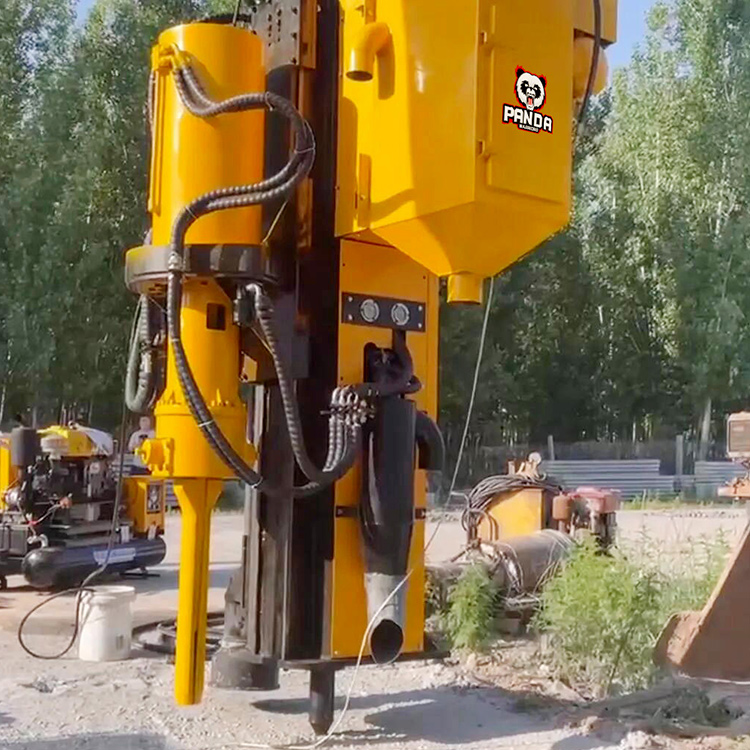
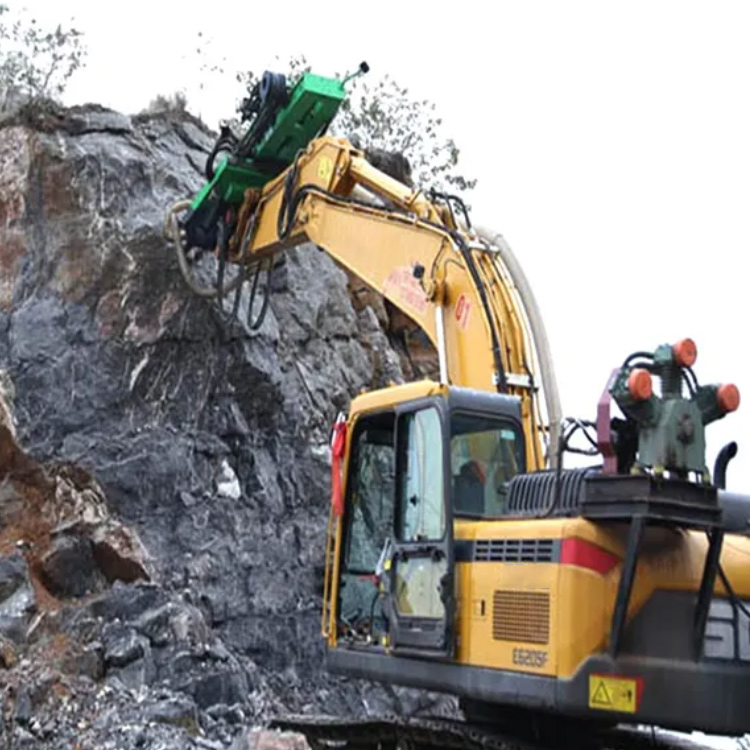 The excavator-mounted rock drill and splitter attachment is drilling and splitting rock on a quarry face.